
Socialization vs. Obedience: What Comes First?
New puppy owners often hear two pieces of advice that seem to compete with each other:
“Socialize your puppy as much as possible.”
“Start obedience training early.”
So which one actually comes first?
The truth is: obedience comes first—and it makes socialization successful.
Let’s break down why.
What Socialization Really Means
Socialization is often misunderstood.
It does not mean:
-
Letting your puppy greet every dog and person
-
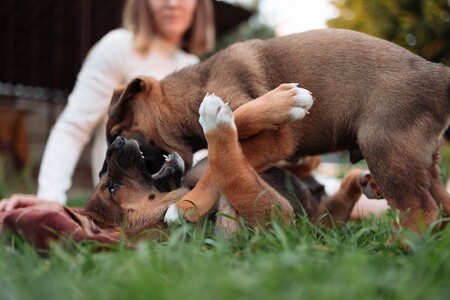
Allowing uncontrolled play everywhere you go
-
Forcing interactions
True socialization means teaching your puppy to:
-
Stay calm around new environments
-
Be neutral around people and dogs
-
Look to you for guidance in unfamiliar situations
A well-socialized dog is confident, not chaotic.
What Obedience Training Really Means
Obedience training is about communication and structure.
Early obedience includes:
-
Responding to commands
-
Learning boundaries and rules
-
Understanding how to turn on and off energy
-
Respecting the handler
Obedience isn’t about control—it’s about clarity.
Why Obedience Should Come First
Without obedience, socialization often turns into overstimulation.
Here’s what happens when puppies are over-socialized without structure:
-
Jumping on people
-
Pulling on the leash to greet dogs
-
Barking or whining when they can’t interact
-
Developing leash reactivity
Obedience gives your puppy the tools they need to handle the world calmly.
How Obedience Improves Socialization
-
Controlled
-
Calm
-
Productive
A puppy who can sit, stay, and focus on their handler learns that not every distraction requires a reaction.
This builds:
-
Confidence
-
Impulse control
-
Better behavior in public
The Right Balance: Structured Socialization
This doesn’t mean avoiding socialization altogether.
The goal is structured exposure:
-
New places
-
Different sounds
-
Various surfaces
-
People and dogs at a distance
All while maintaining obedience and calm behavior.
Think of obedience as the foundation—and socialization as what you build on top of it.
Common Mistakes Puppy Owners Make
Many owners accidentally:
-
Allow constant greetings
-
Skip obedience until later
-
Reward excitement instead of calm behavior
These habits often lead to behavior issues that require correction later.
How Professional Training Helps
At Off Leash K9 Training, we combine:
-
Age-appropriate obedience
-
Controlled socialization
-
Real-world distractions
-
Clear communication
This approach creates dogs that are:
-
Confident
-
Well-mannered
-
Reliable on and off leash
Build the Foundation First
Socialization is important—but obedience makes it effective.
By teaching your puppy structure and communication first, you set them up to confidently navigate the world without fear, frustration, or chaos.